How I work with AI
Design first
I decide first. Then AI works inside what I decided.
I treat it as a colleague. Less senior than me in most things. More senior in a few.
It’s not about which model. The model will change. What got decided stays.
What it changed
It changed how much I can read, test and draft before a room meets.
By a room I mean the people who have to decide together.
Who carries what
AI carries the groundwork: the research, the matching, the first pass.
I keep the insight, the judgement and the storytelling.
Llama is my agent. It’s a llama, and it says so.
It reads my feeds, keeps my notes, draws the diagram and tells me what happened.
The watching, I hand over. The deciding, I keep.
Some of what I’m trying, in one line each.
- Listening. Finding things was never the problem. The team never saw what I saw.
- Working toward a goal. With a team, I’m testing a page where everyone answers the agent’s questions together.
- Memory. More memory is not more knowledge. It gets written down once, and rewritten when it stops being true.
- A booking bot for a clinic. The model suggests. The code owns every change.
- SaysWho. I see a claim, I share the link, I get the facts. Llama checks with it too.
The risk
AI will only agree with you. However you ask, it hands your own view back.
And an agent will happily build the wrong thing fast.
So nothing I build gets to judge itself.
For every question, I ask for three sides: the for, the against and the in-between.
Before an idea meets real people, it meets simulated ones. A CEO, a user, a compliance officer, reacting to each other.
I first used this for market calls on a crypto project. Then I pointed it at strategy and campaign lines.
It doesn’t tell me what will happen. It gives me better questions.
None of them decides. That’s still me.
AI can’t settle a disagreement between two people. So I get the people to settle it.
I write the decision down once, before anything is built.
Where it counts, a person says yes or no. The reason is saved with the decision.
Experiments
-
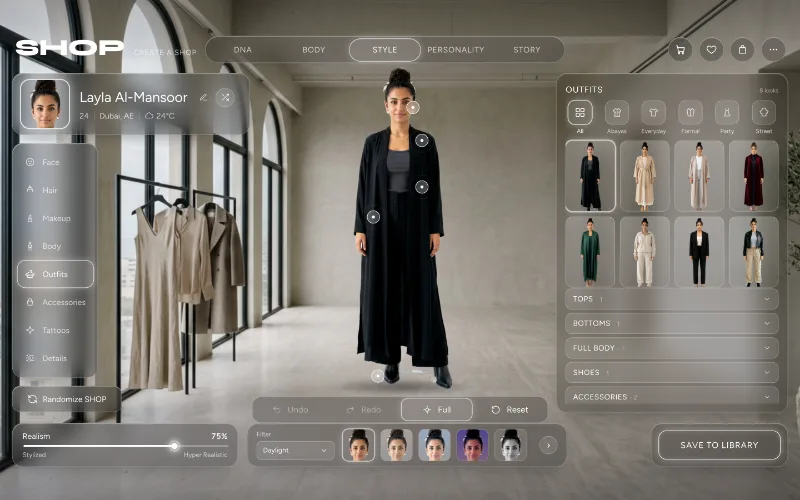
 Google AI Studio
An experiment in ambient shopping.
- Stage
- In progress
-
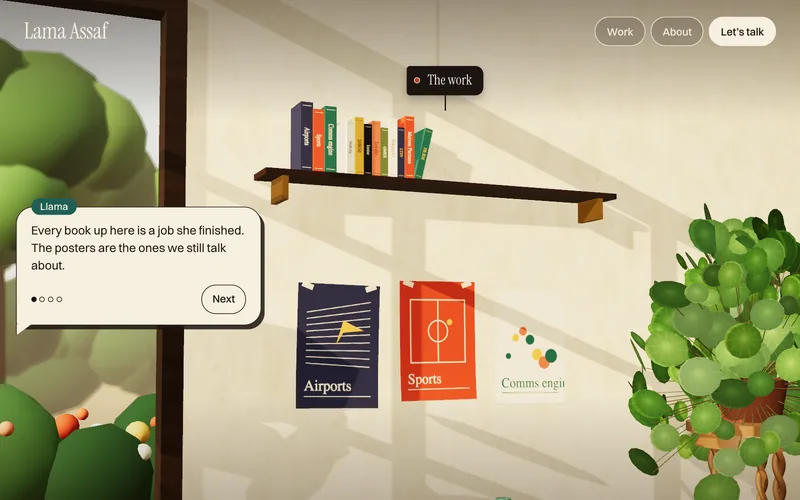
cook, by Leon Lin
My site as my own room. Llama sits at my table and tells you about what you pick.
- Hypothesis
- A verification loop can hold a design to the bar its references set.
- Method
- A verification loop for design: each round is rendered, set beside the references, scored and fixed.
- Stage
- In progress
- Learned so far
- The scores rose for a few rounds, then stalled. Past that point, more tuning did not close the gap to the references.
-
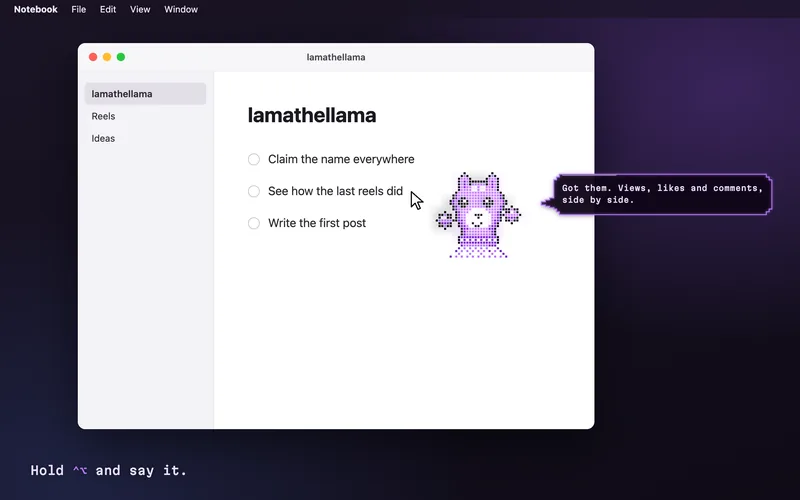
Roamies, by Ken Kai
Llama is my agent. It stays by my cursor and does what I ask, a keyboard or a voice message away.
- Hypothesis
- An AI that does the thing where I already am, one shortcut or one sentence away, not in a chat window.
- Stage
- In progress
- Learned so far
- The tools run out of sight: Llama thinks, then answers. So the answer says what Llama did, not what it found.
Research and Insights
When a product took two years, someone hired a designer. When it takes two days, nobody does.
The making got easier. The thinking got skipped.
An idea gets ignored for two reasons. It’s too early, or it’s told badly.
The first is timing. The second is my job.
There is no neutral voice. Robotic is a personality too.
Not choosing is still a choice. Just not yours.
The loudest complaint is often the one you can’t fix.
The rare request is where the product is. Count less, read more.
Talk
Designing for the future of AI products
Maggie Appleton · Dive Club
Talk
The design process is dead
Jenny Wen · Lenny’s Podcast
Talk
From SaaS to agentic UX
Damian Gribben · Belfast Design
Talk
Design systems in the age of agents
Cassie Groos · Hatch Conference
More work
If it ships, someone answers for it, and that someone is me.
Get in touch