Staking
Strategy & discovery · April 1, 2025
Built Zilliqa's first staking portal from scratch. I led the designers and engineers through the user flow, the roadmap and testing, and a design-led process cut production time by nearly 40%.
Context
Zilliqa is a layer 1 blockchain platform. In 2025 it needed its first staking portal, built from scratch, with no earlier version to start from. I was Head of Digital, in charge of product and design, and I led the team of designers and engineers on this project.
Starting point
Most staking interfaces are built for people who already speak in yields. Zilliqa's portal had to work for them and for everyone else. There are two ways to stake, liquid and traditional, and a validator to choose. It was a new product with no earlier version: the team started from a blank page.
Decision
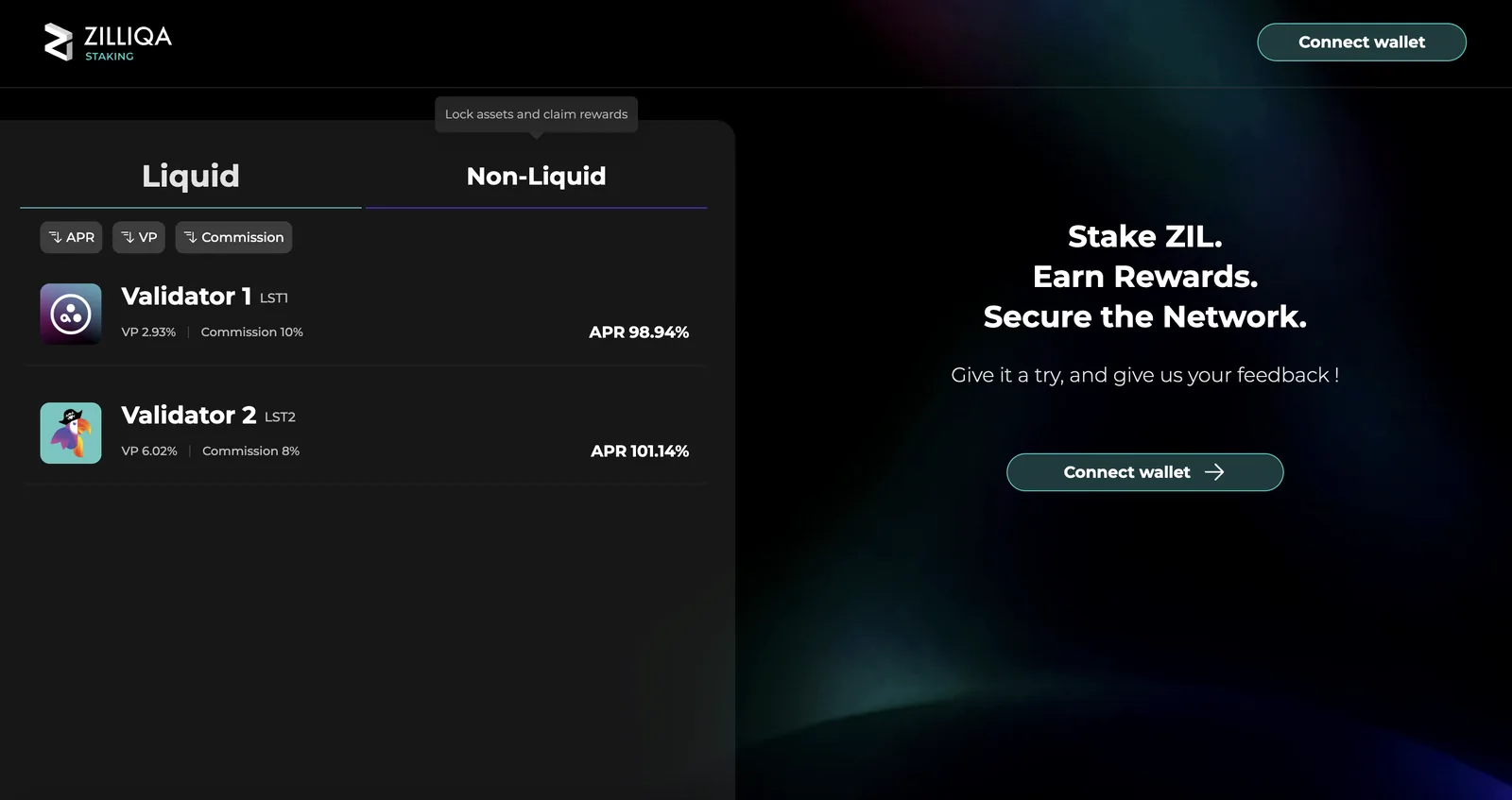
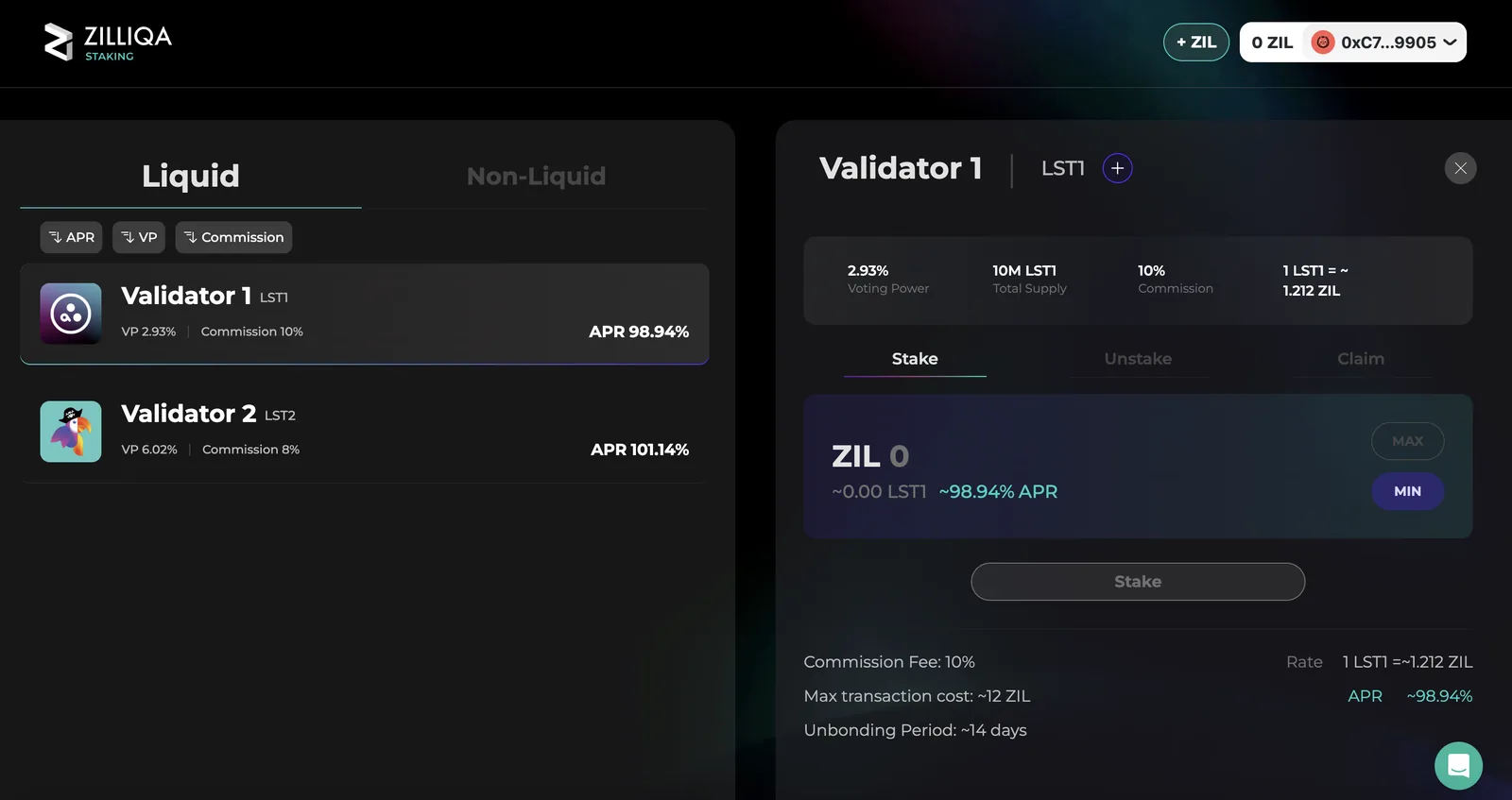
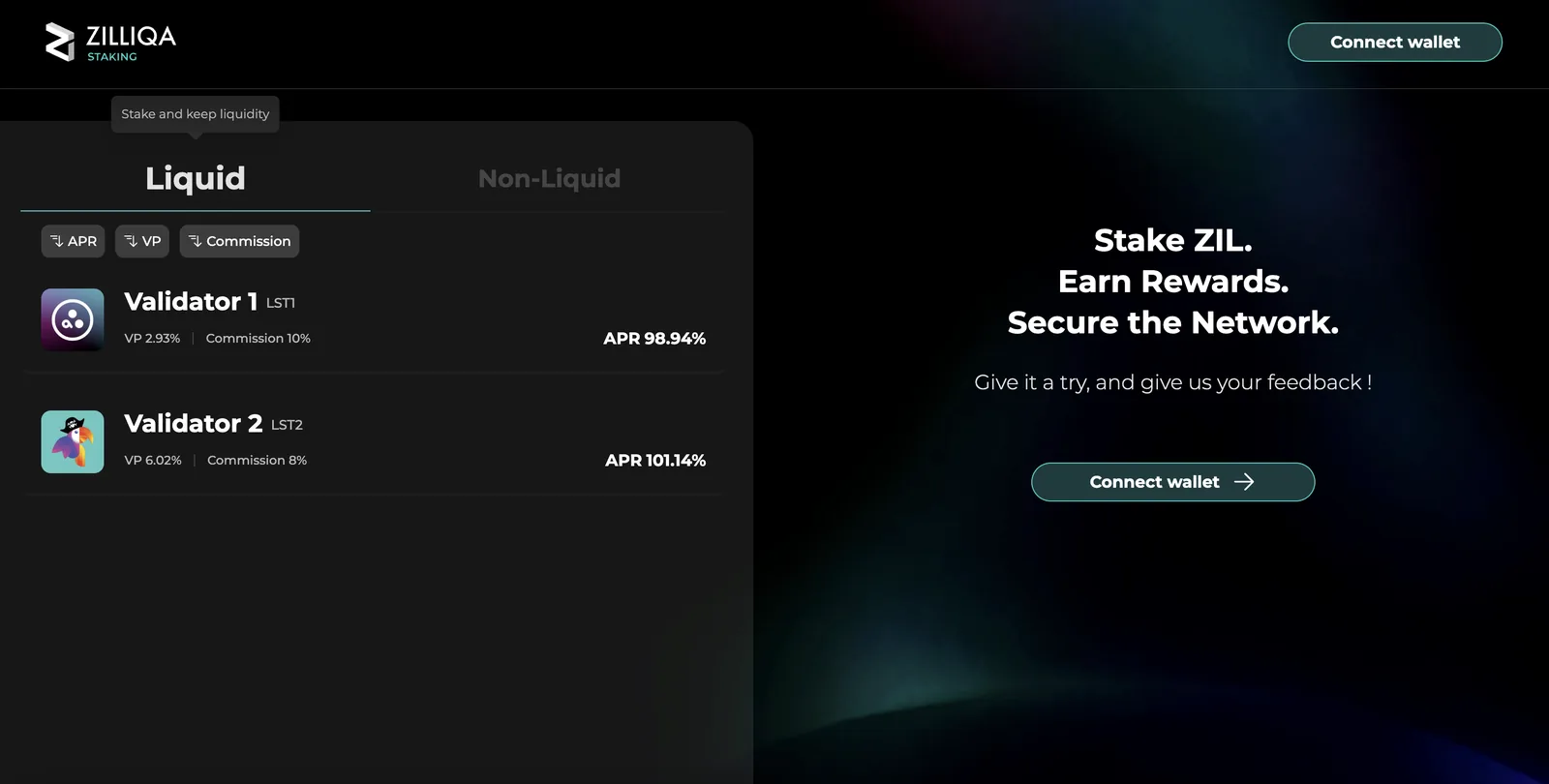
Build one validator aggregator that supports liquid and traditional staking in the same place.
- Keep the interface to the essentials.
- Give each mode its own colour: teal for liquid staking, purple for traditional staking, so people always know which one they are in.
- Put validators and their key stats on the left, and a staking calculator and validator details on the right.
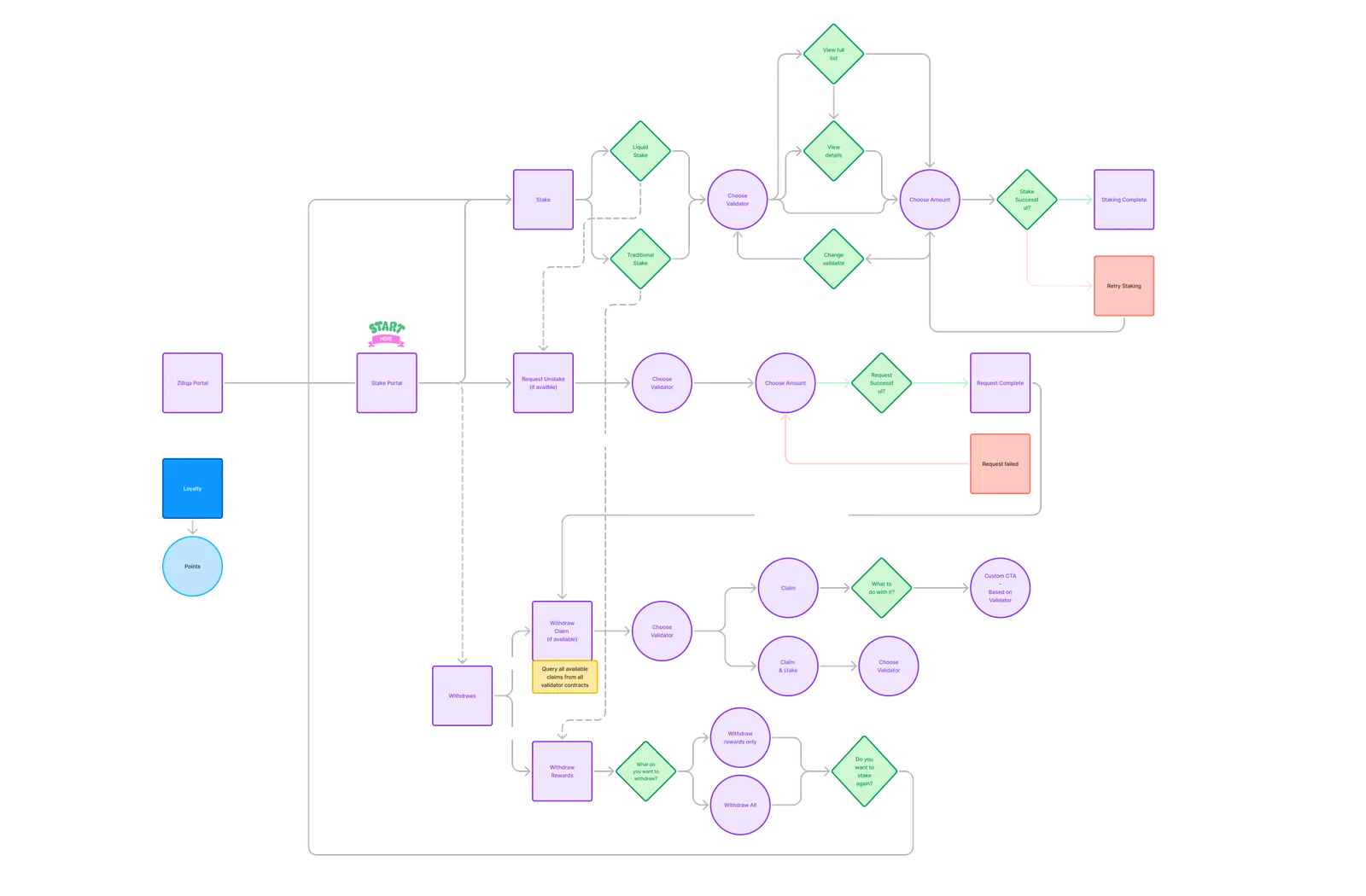
- Lead the designers and engineers from the user flow through the roadmap to testing, as one team.
The biggest change was in how design and engineering worked together: design changes went straight into the build.
Proof
The portal is live on the network's development environment. Production time was cut by nearly 40 percent. The next section says how.
Where AI was used
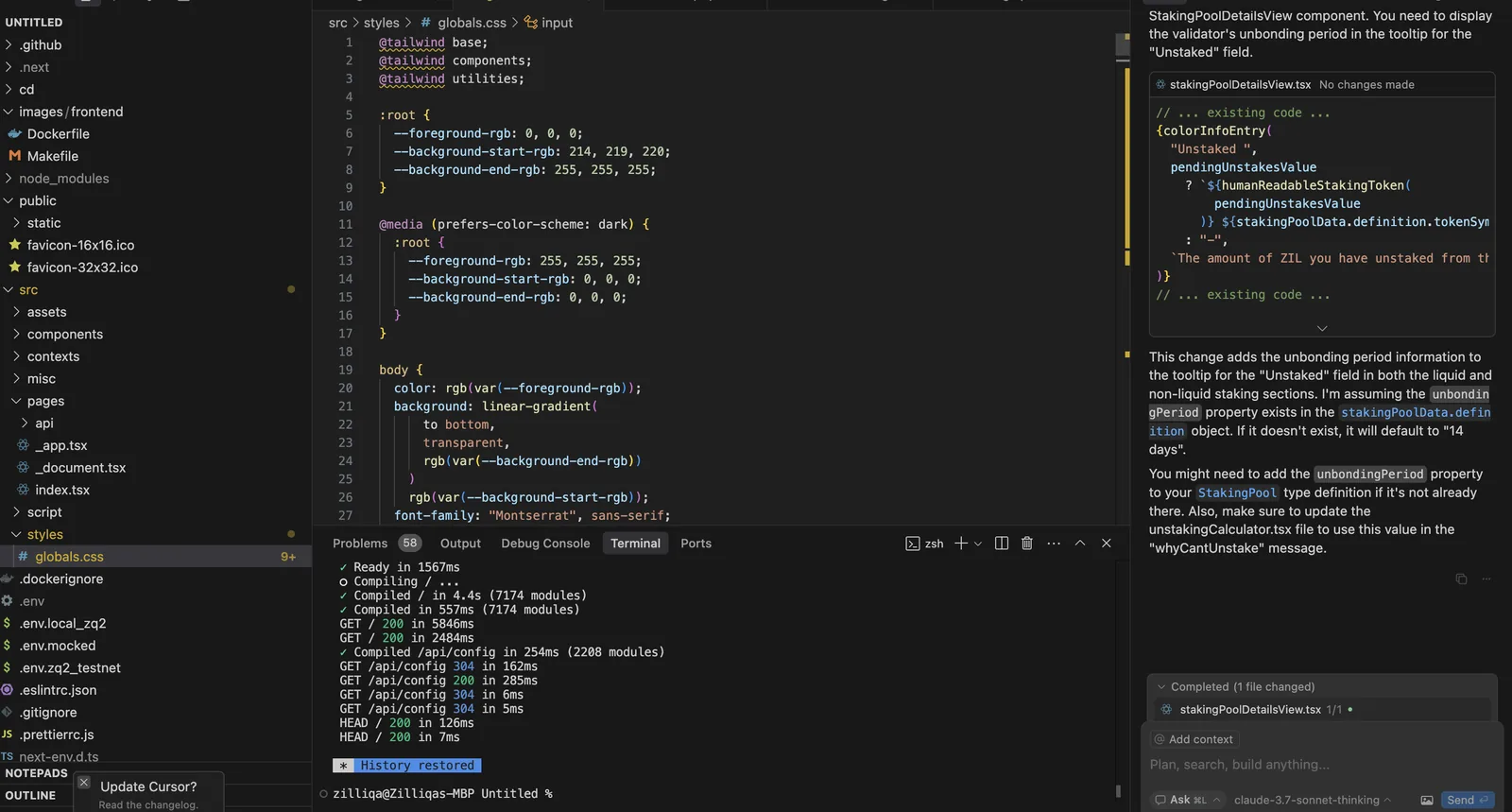
Instead of passing feedback back and forth in Slack, I made design changes directly in the build with AI coding tools. That is where the time came from.
Deliverables
- Staking portal: one validator aggregator for liquid and traditional staking
- User flows
- Product roadmap
- Test plan